
Do the Scriptures Support the Separation of Clergy and Laity in the Church?
The Lord never intended to have two classes of people in the assembly of His people – the clergy and laity in the church. There is no outline in Scripture for a ruling class made up of priests, bishops, pastors, ministers, cardinals, and so on.
Christ as Head: No Separation of Clergy and Laity in the Church
Very simply, the Lord Jesus was and is to be the head of every local church (Revelation 2). And, every local church was to be completely autonomous. There was to be a plurality of elders (1Timothy 5:17), recognized by each assembly, to lead and protect the flock. They were to lead the flock to food (Scriptures) and protect it against false doctrines and heresies. This shows the biblical church leadership structure, where there is no separation between clergy and laity in the church.
This pattern reflects the biblical church leadership structure — a New Testament model where Christ is the head and elders serve the flock with humility.
The Biblical Role of Elders in Church Leadership Structure
These elders were not to preside over the church in terms of prayer, teaching, and worship or in any other elevated manner. These men did not have to graduate from a seminary or be ordained by some human religious institution. They didn’t have to wear special clothes and they were never to be recognized as intermediaries between God and man. Most importantly, they had absolutely no power to forgive sins.
Everyone shared responsibility for prayer and worship, and gifted men conducted teaching (Ephesians 4:11). Recognizing someone as an elder honored them, and these men led by example in humility: “…for he that is least among you all, the same shall be great.” (Luke 9:48)
This demonstrates the royal priesthood principle and confirms that all members share ministry, not just a special clergy.
The Rise of Post-Biblical Hierarchies, Creating Clergy and Laity in the Church
There is no Biblical blueprint for a multi-divisional hierarchy of religious elite that was to rule over a vast network of local churches with each one reporting back to and funding headquarters. Despite the lack of any Scriptural mandate, the Catholic Church adopted just such a vast system sometime in the 3rd or 4th centuries. To a lesser degree, the protestant churches followed suit soon after the Reformation.
This created a separation between clergy and laity in the church and departed from the biblical church leadership structure intended by Christ.
What About Priests, Pastors, and Elders?
There were priests in the Jewish Levitical system (Old Testament). However, no such office is mentioned in the New Testament. The Apostle Peter did refer to all believers in Christ as a “royal priesthood” (1Peter 2:9).
Some will argue that “bishop”, “pastor”, “elder” are synonymous in translation. This is true to some extent, but never do these words imply that a person with such a title is in a ruling position to the extent we see today. Again, Scripture shows no separation between clergy and laity in the church.
This does not mean that priests, pastors, etc. are bad people and that their work is of no value. It’s the tendency of people to seek leadership positions, some with good intentions and others with self-serving motives. The Lord will be the final judge of man’s motivations.
The Unbiblical Use of Clergy Titles
People are most perplexed by the titles used to address these clerics. Some are called ‘Reverend,’ some ‘Minister,’ some ‘Pastor,’ and others ‘Father.’” The first-century church never used these titles, even when addressing the apostles.
As far as we read, the apostles were unassuming men that suffered severe reproach because of their identification with Christ. They didn’t expect and neither would they allow anyone to greet them as “reverend.” The apostles did not promote clergy and laity in the church.
Somehow the words of Christ are lost on the clergy: “Beware of the scribes, who like to walk around in long robes, and love respectful greetings in the market places, and chief seats in the synagogues and places of honor at banquets…” (Luke 20:46)
Man’s Traditions Must Not Conflict with God’s Commands
The titles previously mentioned were functions, not titles. Someone who ministered the Word of God was never given the title of “Minister.” Today, churches, especially evangelical churches, are referred to as “Pastor Smith’s” church or “Pastor Clark’s” church as if the particular church was their property. This demonstrates the misuse of authority and the division between clergy and laity in the church.
We read this verse in Matthew 23:9, “And call no man your father upon the earth: for one is your Father, which is in heaven.” Despite this very clear and direct statement by the Lord Jesus, the whole of the Catholic Church is required to address priests as “Father.” The Church enforces this practice even though Scripture forbids it. The Apostles never called each other father nor asked anyone else to call them father, so why then has the Catholic Church adopted a policy which is in direct contradiction to the expressed will of the Son of God?
Despite this clear command, the Catholic Church requires its members to address priests as “Father.” This practice elevates human tradition above the biblical church leadership structure.
Clergy and Laity in the Local Church
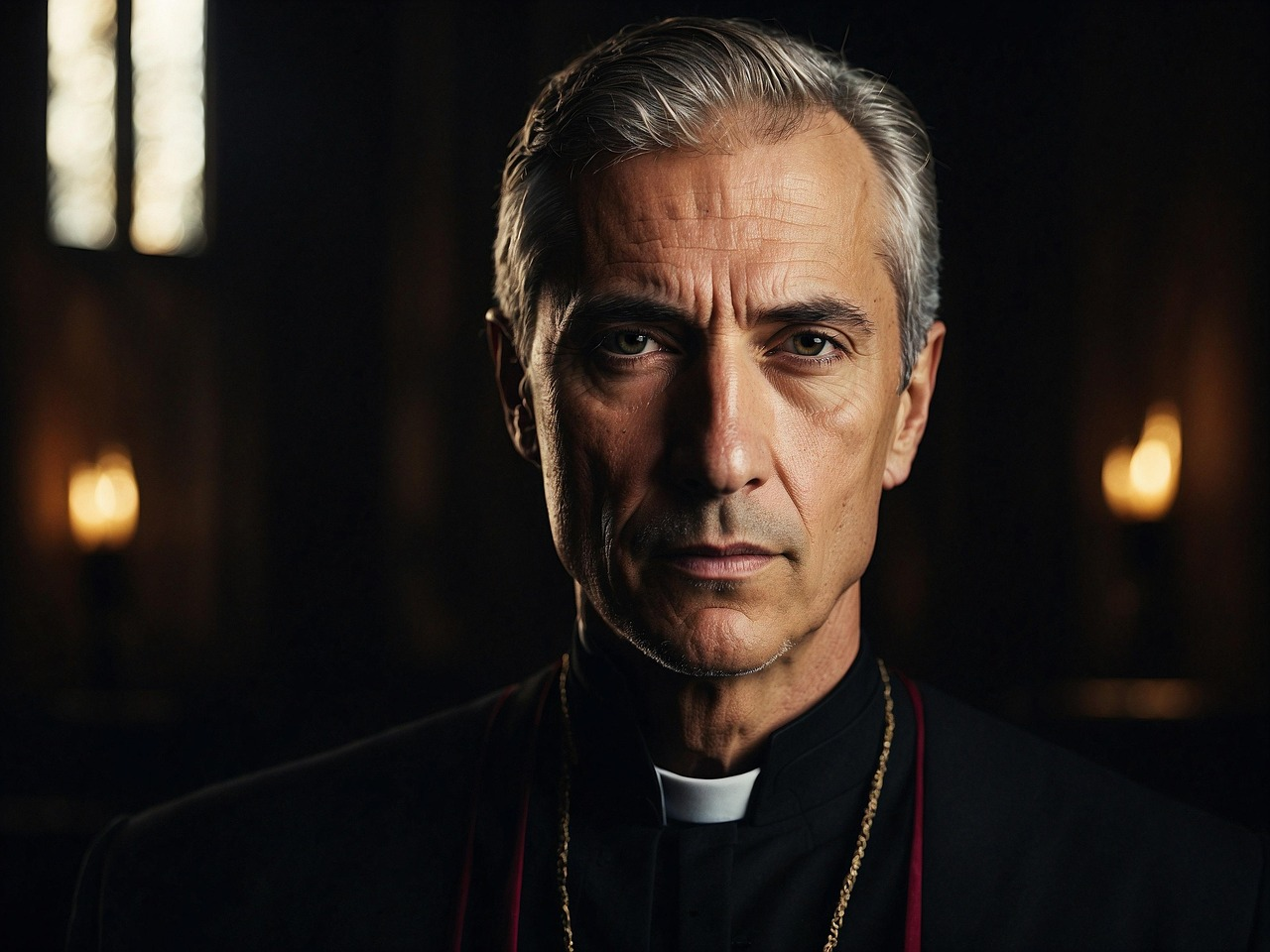
The blog critiques the distinction between clergy and laity in the church. It argues that the New Testament does not support a hierarchical clergy class and calls all believers to serve equally. Believers share responsibility for prayer, teaching, and worship, reflecting the biblical church leadership structure.”
Why is it necessary among several religious groups, who claim to be Christian, that the clergy dress in a fashion separate from the rest of us? The New Testament does not proclaim that any of the apostles wore a white collar. It also does not show them arraying themselves in medieval costume while conducting church affairs.
I realize that every part of the priest’s attire has some religious significance. Unfortunately, it only further distinguishes two classes of people whom God never ordained.
When one of these elevated clergy falls into gross sin of one kind or another, defenders of this system quickly remind us that he is only human and no one is perfect. Yet, we are all required to consider these men holy, consecrated and ordained as special agents of Christ. So, which is it?
The Distinction of Clergy and Laity in the Church May Be A Contributing Factor for this Abuse
People have tolerated such hypocrisy for centuries. They hardly challenge the position of these “special agents,” even when the sin involves worldwide exploitation of the innocent. Indeed, the upper echelon of the Catholic Church took great strides to cover up these atrocities.
And, to compound matters, the Church transferred these “offenders” to unsuspecting parishes, knowing that these crimes against children would continue. The Church paid millions of dollars in retribution to known victims, but only after secular courts ordered them to do so. You might want to consider how the Church uses your offerings the next time the collection basket comes in front of you.
How ironic, it was The Domain of Darkness that forced this “bastion of holiness” to address their own egregious behavior. Do you really think that such an organization has any affiliation with God? If you do, then exactly what will it take to wake you from your stupor?
Some may ask: What about other religions and denominations? Don’t they have scandals also? Yes, pastors, deacons, ministers and elders fall into sin. However, the overriding difference is that these men do not claim such a lofty position as Catholic priests. Priests claim to have the power and authority to forgive sins and issue penalties for sin (penance). They also claim to turn ordinary wafers and wine into the “actual” body and blood of Jesus Christ.
Clergy Failure vs. Biblical Discipline
Clearly, to have such authority on earth one would think them to be above such a gross sin. People expect the hierarchy of such a ‘holy system,’ more than any other organization, to deal swiftly with abuse. Instead, it covered up and perpetuated the wrongdoing for fear of scandal.
In the 5th Chapter of Corinthians, the apostle Paul criticized the Corinthian believers. They failed to excommunicate an individual guilty of a gross immoral sin. However, his sin was still less foul than that of Catholic priests who engage in child molestation. Paul did not worry about scandal, and God’s word records this account for all the world to see.
This also ties into the assurance of salvation. Every believer has access to Christ’s forgiveness and guidance. A division between clergy and laity in the church is unnecessary.
Warnings From Jesus and the Apostles
The Lord Jesus warned His disciples about false teachers who would come.“Beware of the false prophets, who come to you in sheep’s clothing, but inwardly are ravenous wolves.” (Matthew 7:15)
The apostle Peter gave us this warning: “But false prophets also arose among the people, just as there will also be false teachers among you, who will secretly introduce destructive heresies, even denying the Master who bought them, bringing swift destruction upon themselves.” (2Peter 2:1)
These warnings remind believers of the importance of the biblical assurance of heaven. All believers can receive salvation and protection in Christ without mediation by a clerical elite.
Investigators found more than a few Catholic priests guilty of such reprehensible sin, which does not surprise me. After all, they really are just ordinary men despite claims to the contrary. For an institution claiming to originate from the Lord Himself, the hierarchy’s ignoring of this internal cancer is unforgivable. The hierarchy allowed it to continue with full consent
The fact that there was, and still is, no moral outrage from the Catholic “laity” is striking. It speaks volumes about the degree of indoctrination among the Catholic people. The “laity’s” total disregard for child safety and blind allegiance to their priests and bishops is incomprehensible.